
In the News
Lunch with Sumiko: How HMI Medical CEO grew her parents’ company from the family dinner table to the boardroom
Inspired by her doctor father and business professor mother, Ms Chin Wei Jia returned from the US to lead HMI Medical, which her parents founded.
26 April 2026
Share
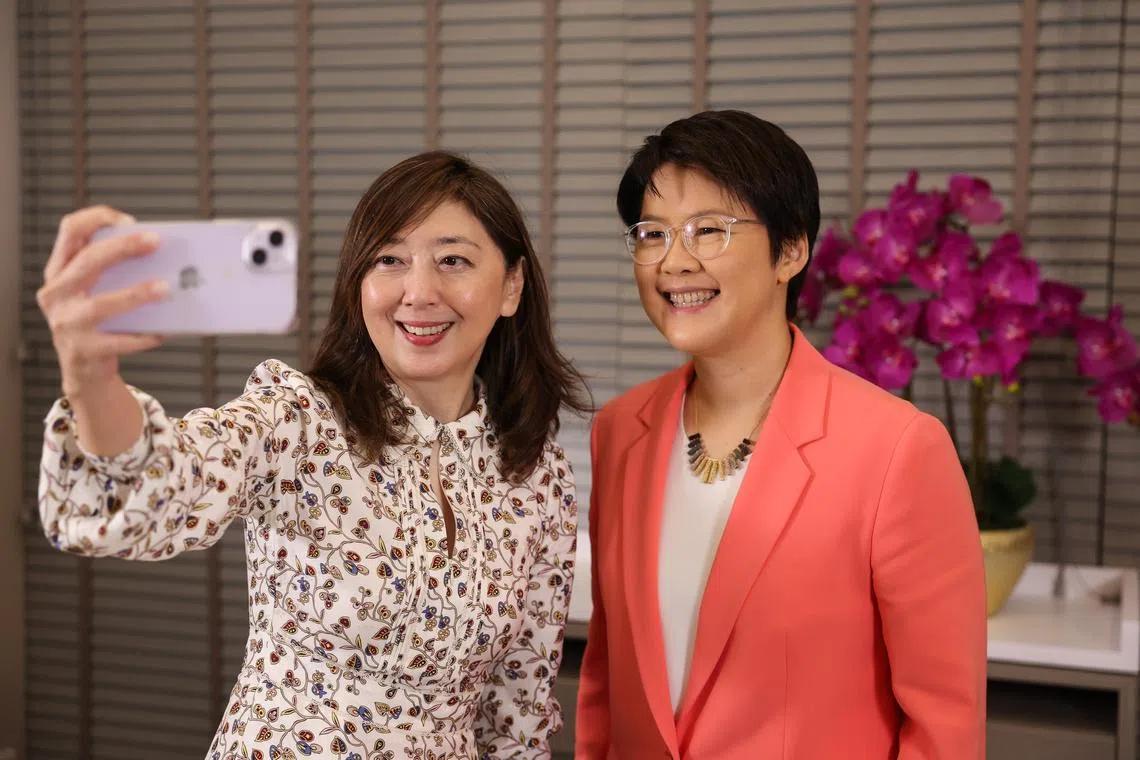
Growing up, Ms Chin Wei Jia’s family dinners were never just about food. They were a window into her parents’ working lives.
Her father, a general practitioner, would sometimes be interrupted mid-meal by his pager and would step away to tend to a patient’s concern. Her mother, a university business professor, shared stories about academia and the corporate world.
From her father, she learnt that healthcare demands constant availability and commitment to patients. From her mother, she absorbed the importance of structure and systems.
“We had a lot of interesting conversations over the dinner table, and we pretty much were learning without knowing that we were learning,” she says, referring to her two siblings. Today, as the executive director and group chief executive of HMI Medical, the company her parents founded, Ms Chin, 47, straddles both worlds: the immediate human realities of healthcare and the strategic discipline of business management.
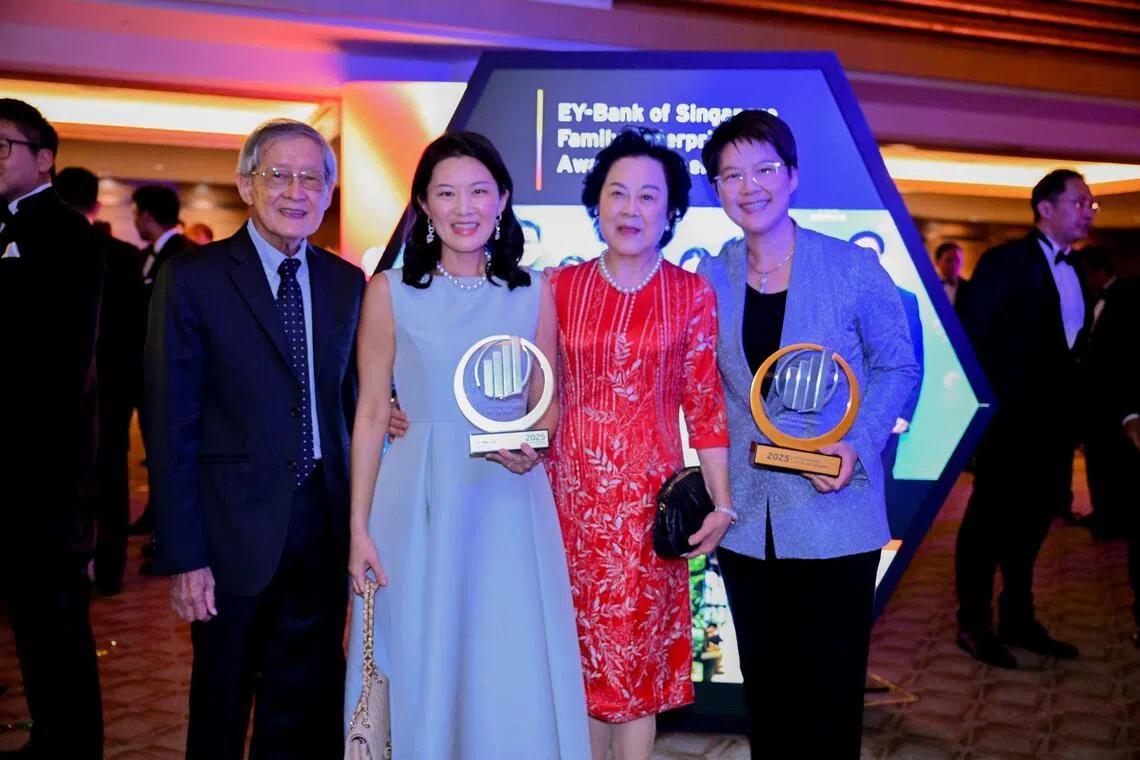
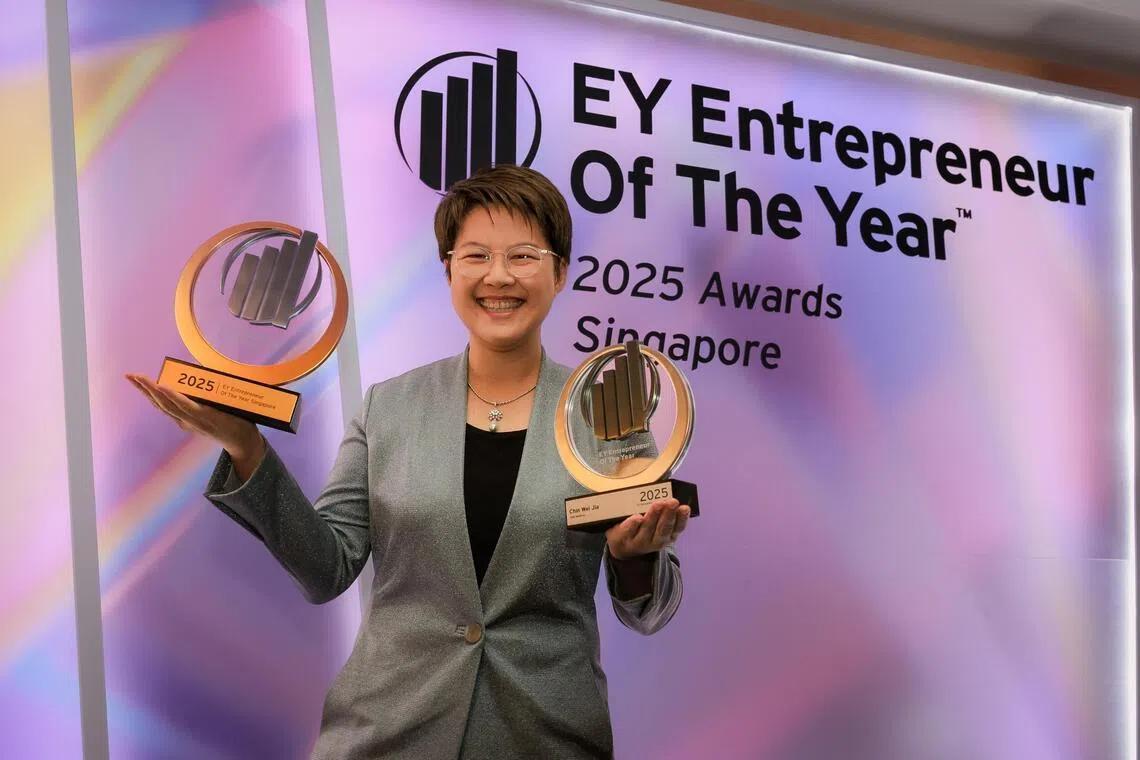
She has put these lessons to good use. In October 2025, she was named EY Entrepreneur of the Year 2025 Singapore for growing HMI from a two-hospital group into a regional integrated healthcare player. She also received the award in the healthcare category.
She has chosen to have lunch at Jia He Grand Chinese Restaurant in One Farrer Hotel, a place she frequents. It is a stone’s throw from her office at HMI Medical Centre, an 11-storey private ambulatory care centre that offers day surgery, GP and specialist clinics, health screenings and radiology.
The restaurant has arranged a private room and a delicious set menu: dim sum, double-boiled chicken soup with pig maw, steamed fillet of sea perch, roasted duck with noodles and a dessert of jelly in coconut.
Dressed in a peach pink jacket and grey trousers, Ms Chin has a pleasant and calm demeanour that comes alive when she speaks about healthcare. Her unruffled manner belies what must be a stressful job that spans both Singapore and Malaysia. Besides HMI Medical Centre, she oversees hospitals in Melaka and Johor, a managed healthcare platform and a social enterprise that provides healthcare training.
It takes teamwork to shoulder such a big job, and over a two-hour lunch, she mentions the word “team” no fewer than 46 times.
I mention that I remember meeting her mother, Dr Gan See Khem, in the 1990s. Your mum was always well-dressed, I say. “Yes, better than me,” Ms Chin jokes.
Dr Gan, 80, who has a PhD in business administration, is executive chairman and managing director of HMI. She taught strategic planning and management at the National University of Singapore’s business administration faculty for 15 years, and was a Nominated MP from 2002 to 2004. She is also a community leader, having served as a council member at the Singapore Chinese Chamber of Commerce and Industry, and as the first woman president of Gan Clan Singapore, which her father founded.
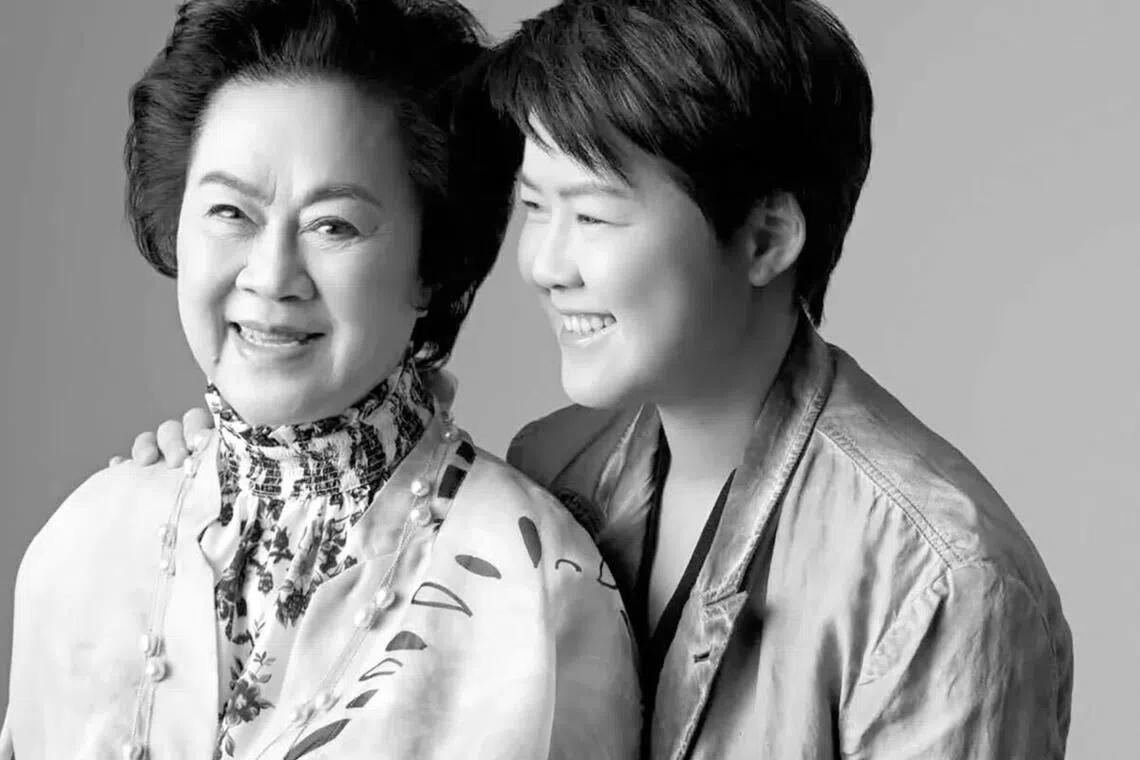
HMI traces its roots to Balestier Medical Centre, a 62-bed hospital founded in 1991 by a group of doctors, including Ms Chin’s father, Dr Chin Koy Nam, 83. The private hospital in Balestier Road served both local and international patients, but was affected by a decline in foreign demand following the Asian Financial Crisis in 1997.
In response, Dr Gan, who was then involved in her family’s property business, founded Health Management International (HMI) in 1998. The company acquired the hospital the following year, rebranding it as HMI Balestier Hospital, and was listed on the SESDAQ board of the Singapore Exchange.
HMI also expanded to Malaysia in 1998 with a stake in Mahkota Medical Centre in Melaka, a struggling 300-bed hospital. It managed and successfully turned it around within three years, later fully acquiring it. In 2009, it launched the 218-bed Regency Specialist Hospital in Johor after taking over an abandoned hospital building project. The group returned to Singapore in 2018 with HMI Medical Centre in Farrer Park.
Ms Chin, the oldest of three children, joined the business in 2002. Her sister Wei Shan runs the family office, and her brother Wei Yao is executive director and deputy CEO at HMI. She grew up in a house in the Tanglin area and attended Raffles Girls’ School and Raffles Junior College. She recalls a carefree childhood, but says she was always aware of global inequalities and wondered why some countries thrived while others faced challenges.
What she also remembers from those years was “the belief that you can do whatever you want to do, that you define your own choices”, she says. “I think I was always very independent-minded,” she adds. “I’ve always liked to try new things – new experiences, new food.”
Her father, she says, has been a quiet, caring influence. He still practises at HMI Medical Centre, and she sometimes hears from patients about how they saw “a very nice doctor” during their health screenings, only to discover it was him. “That’s nice,” she smiles.Her mother is the one with the “big ideas”, she says.
Her mother had high standards when they were children, but preferred to teach by example. A vivid childhood memory she has is of Dr Gan waking the children early in the morning to drive to Johor to observe how rubber was tapped and processed in her family plantations across the Causeway.
“It was a good learning experience, though we were all obviously not very happy about waking up so early,” says Ms Chin.
She went to university in the US, obtaining her bachelor’s degree in economics and international relations at Boston University and her master’s in international relations at the Johns Hopkins School of Advanced International Studies.
She was applying for PhD programmes in 2002 when she received a phone call from her mother asking her to help out at HMI. The burst of the dot-com bubble had led to a recession in 2001.She paused her PhD plans and returned to Singapore. She was tasked with setting up a training centre for healthcare workers such as nurses and inpatient care assistants. HMI Institute of Health Sciences was launched that year, taking over the Balestier hospital building, which ceased medical services.
The experience left a lasting impression. “Nothing beats learning when things are tough,” she says. She learnt the need for sustainability and resilience in business, and how people had to be taken care of during periods of uncertainty.
Within two years, HMI had stabilised its operations. Her mother gave her the choice to stay on or pursue her own interests.
She decided to take a gap year to travel and explore opportunities, including a start-up idea. She realised that a key part of learning is not just discovering what you want to pursue, but also understanding which paths you do not want to take.
Towards the end of her self-funded gap year, “I looked at my bank account and realised I needed to make a decision”. It was either HMI or the world of financial services. Her dream had always been to work in an international organisation like the World Bank.
She made a pros-and-cons list. HMI appealed to her because it allowed her to make an immediate impact on people, aligned with her interest in healthcare and education, and offered opportunities for meaningful work.
The trade-off was entering a family business. “I wanted to do things on my own rather than have something provided.” But she also recognised that she would have a voice in HMI, and there were professional managers she could learn from. She chose HMI.
Strategic acquisitions
Ms Chin’s early years were hands-on and she rose steadily through the ranks, becoming group general manager and CEO of Regency Specialist Hospital in Johor. She was appointed group CEO in 2015.
She describes her early mentors as “fantastic”, noting that until she became CEO, she did not report directly to her mother, instead working alongside professional management teams. Her father focuses on patients.
Being the founders’ daughter came with both advantages and expectations. Ms Chin, who is single, says problems were easier to thrash out, but she had to build her own strengths and establish trust.Her leadership style sounds consultative. She says she gathers input widely, asks questions, pulls the feedback together and brings decisions back for discussion or even a vote.
At work, she addresses her mother formally as “Dr Gan”. When disagreements arise, “we can agree to disagree. At the end of the day, we just focus back on why we are doing what we are doing”.
HMI’s re-entry into Singapore’s healthcare market in 2018 came with its acquisition of a majority stake in StarMed Specialist Centre in Farrer Square. This was a multidisciplinary ambulatory care centre founded by a group of doctors. HMI later fully acquired and rebranded it as HMI Medical Centre.
Ms Chin says the move into ambulatory care was driven by the need to improve access and lower costs for patients. “At that time, we were purely a hospital provider. We thought very hard about it because it’s a very different model and, in some ways, competes with hospitals. But we decided it was better to disrupt ourselves than be disrupted,” she says.
HMI also acquired a majority stake in OneCare Medical, a chain of neighbourhood clinics, later taking full ownership and growing it into a network of close to 40 clinics.
In 2019, HMI – then listed on the Singapore Exchange mainboard – was taken private and delisted by Swedish private equity firm EQT in a $611 million deal. The Chin family retains a stake of close to 40 per cent as the single largest shareholder, followed by EQT. Since then, the group has made bold moves to expand its footprint.
Between 2022 and 2024, HMI acquired majority stakes in several specialist groups, including Eagle Eye Centre (ophthalmology), Harley Street Heart and Vascular Centre (cardiovascular care) and Advanced Urology Associates.
In 2023, it fully acquired MHC Asia Group, a leading medical benefits administrator and healthcare technology platform in Singapore with more than 2,000 panel clinics and wellness providers. It has since been rebranded as HMI Managed Healthcare.
More recently, a new extension was completed at Johor’s Regency Specialist Hospital, increasing its capacity to 500 beds.
Ms Chin says HMI’s philosophy is to treat every part of healthcare as equally important. Unlike some medical groups that focus mainly on, say, hospitals, HMI looks at primary care, specialist care, ambulatory care and managed healthcare as interconnected pieces.
Primary care is designed to be accessible, with evening and weekend clinics and telemedicine. Specialist care is organised into clear, sub-specialised groups so patients can have all related conditions managed in one place. Managed healthcare focuses on cost efficiency, while ambulatory care allows innovation through a more flexible, patient-centric business model.
She likens the healthcare ecosystem to a movie production: The stars (doctors) deliver the main performance, the cast and crew (nurses, allied health staff, support teams) make sure everything runs smoothly, and the producer (management) ensures funding, resources and overall direction.
“We all have a part to play and there is no role that is not important. Because what we are here to do is to help people at a time when they need it, right?” she says.
“When I walk into a hospital today, or one of our clinics, and I see people waiting, I don’t just see people waiting. I see people who are there because they have a concern or condition, and they are anxious, so what can we do for them above and beyond the medical treatment? What can we do to make them feel a bit more reassured?”
This patient-first mindset is reflected in HMI Institute, Ms Chin’s first project and one that remains close to her heart. After its lease in Balestier expired, it relocated to Bukit Merah, then to the Devan Nair Institute for Employment and Employability in 2015.
It offers courses ranging from nursing certification to caregiver and first-aid training, and helps participants transition into healthcare careers. During the Covid-19 pandemic, it trained thousands of swabbers and supported the management of community facilities.
Ms Chin recalls internal questions about whether HMI should remain in training, given that it was not a strong revenue driver, and instead focus on its core healthcare business.
“But my team and I felt very strongly and passionately that healthcare is not just about business. It’s not just about returns,” she says. They put up a paper arguing that quality healthcare depends on people being equipped with the right skills to care for patients. Its impact in transforming lives is substantial.
The shareholders and board were persuaded, and in 2019, HMI Institute was converted to a social enterprise. It is a win she clearly still savours.
Looking ahead, she is keeping an eye on the upcoming Rapid Transit System (RTS) link from Singapore to Johor Bahru. Already, a sizeable number of Singaporeans do their health screenings in Johor, she says.
Lunch over, we move on to the photograph before the video crew follows her back to HMI Medical Centre for more shots. There, she is back in her element, moving between meetings and teams in a day that rarely slows.
This article was first published in The Straits Times