Understanding Your Skin Cancer Screening Journey
Medically reviewed by Dr Tan Chee Hian,
Consultant Dermatologist, Dermatology Collective Clinic & Surgery
04 November 2026
Share
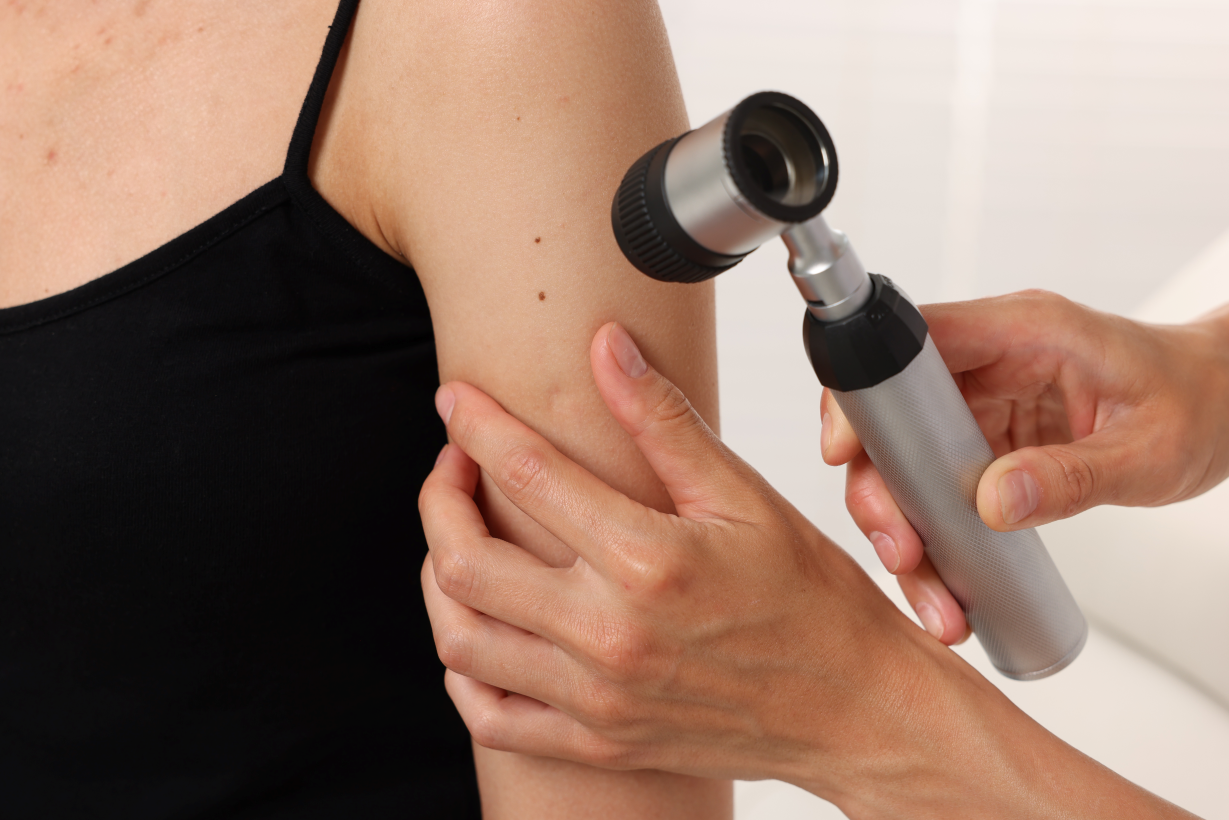
A rough patch that won't go away. A sore that keeps coming back. A spot that looks slightly different from last year. Most people notice these things and aren't sure what to do next.
Skin cancer rates in Singapore are relatively low compared to countries with higher UV exposure or fairer-skinned populations. Even so, incidence is rising among younger patients, and many people remain unsure what a skin cancer screening actually involves or when they should get one.
Here's a practical guide to what to look out for, what screening involves, and why timing matters so much for treatment.
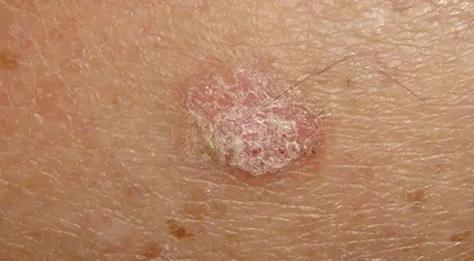
(Photo from uvderm.com)
What to look out for
Two of the most common warning signs are often mistaken for ordinary skin ageing or a stubborn dry patch:
Actinic keratosis (sometimes called a "sun spot" or "solar keratosis") is a rough, scaly patch that develops on skin that's had years of sun exposure, commonly the face, ears, scalp, back of the hands, and forearms. It's usually pink, red, or skin-coloured, and often feels rougher than it looks, a bit like sandpaper. Dermatologists treat it as an early warning sign, since up to 30% of these lesions go on to develop into squamous cell carcinoma (SCC) over a period of 5 years.
Squamous cell carcinoma (SCC) is one of the more common forms of skin cancer treated locally, and it also tends to show up on sun-exposed areas. It can look like:
- A firm, raised bump that keeps growing
- A patch that feels crusty, scaly, or wart-like
- A sore or ulcer that doesn't heal, or keeps coming back
- An existing rough patch that suddenly grows, thickens, or starts to bleed
Both conditions can resemble something minor at first glance, a dry patch, a pimple that won't go away, a bit of sun damage. That resemblance is exactly why they're so often missed or ignored.
People are used to thinking of skin cancer as a dark, irregular mole. A rough pink patch or a sore that won't heal can slip past that mental picture entirely. A spot that's been there for weeks without healing or a rough patch that's changing is worth getting looked at.
Dr Tan Chee Hian
Consultant Dermatologist at Dermatology Collective
Who should get screened
Skin cancer risk isn't evenly distributed. You may want to prioritise a screening if you:
- Are part of Singapore's Caucasian or expatriate community, given higher baseline risk
- Have a family history of skin cancer
- Have fair skin, freckles, or a history of sunburn
- Spend significant time outdoors, whether for work or sport
- Have noticed a new or changing patch, sore, or lesion
"A screening itself is quick," Dr Tan notes. "Many results turn out to be reassuring, but when they're not, catching things early is what makes treatment simpler."
--
Ready to get checked? Schedule a skin cancer screening consultation at Dermatology Collective with Dr Tan Chee Hian. Book an appointment →
--
What happens during a screening
A skin cancer screening is generally straightforward and non-invasive. It typically involves:
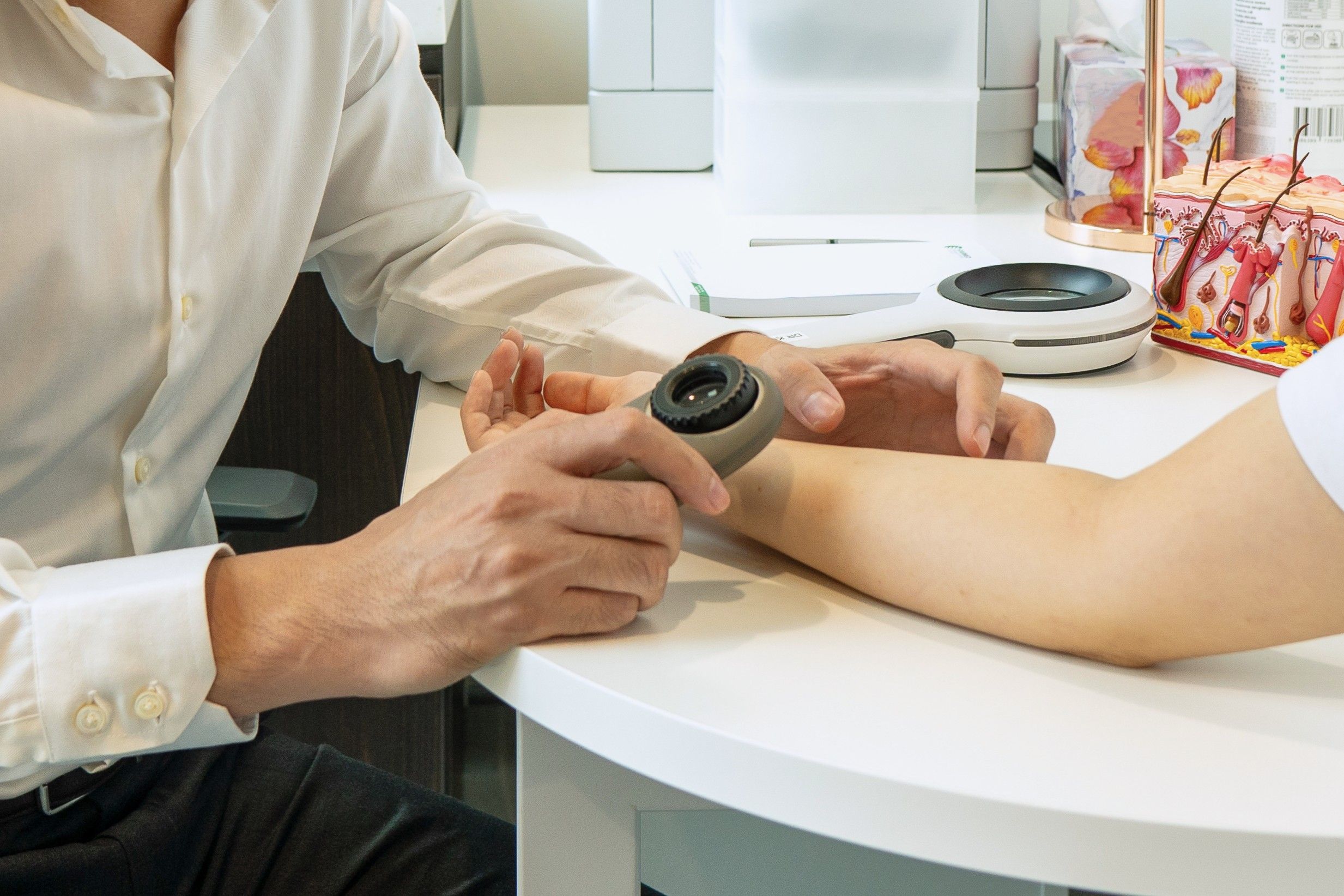
- A full-skin visual examination by a dermatologist, often using a dermatoscope to look more closely at any spots of concern
- A discussion of your personal and family history, sun exposure, and any changes you've noticed yourself
- A biopsy, if a lesion looks suspicious, to confirm the diagnosis
- Photographs taken of any areas of concern, so that if treatment is needed, progress can be tracked and compared over time
- A tailored follow-up plan, whether that's monitoring, treatment, or a routine recheck interval
Why early detection changes your treatment options
Timing is the biggest factor in how invasive your treatment needs to be. Today, most skin cancers diagnosed later are treated surgically, an effective approach, but one that comes with scarring, downtime, and real anxiety for some patients. Caught earlier, patients often have gentler options available.
"The earlier we catch a lesion, the more likely we can treat it with something like photodynamic therapy instead of surgery," explains Dr Tan.
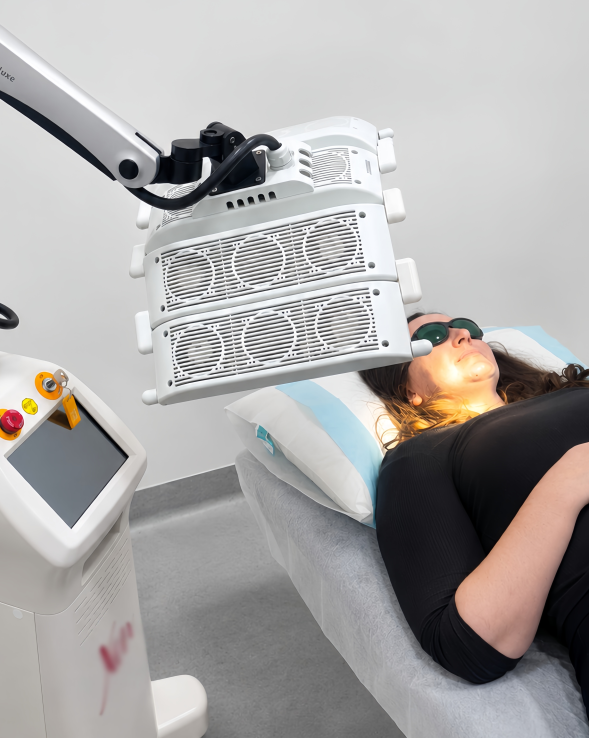
(Photo from The Melanoma Centre)
A non-invasive option: photodynamic therapy (PDT)
For appropriate early-stage or pre-cancerous lesions, photodynamic therapy (PDT) is an internationally approved non-surgical treatment that uses a light-sensitive cream which needs to be activated by a specific wavelength of light to selectively destroy abnormal or diseased skin cells while largely sparing the surrounding healthy tissue.
"For the right early-stage lesions such as actinic keratosis and squamous cell carcinoma in-situ, PDT can offer patients a non-surgical alternative to consider," says Dr Tan.
The takeaway
A skin cancer screening is a quick, low-effort way to catch problems while your options are still simple. If you've noticed a rough patch or a sore that won't heal, or you fall into a higher-risk group, it's worth getting checked.
Book an appointment →