
Weight Management
Can GLP-1 medicines reduce cancer risk?
Medically reviewed by Dr Tan Hui Li
Clinical Head, General Practitioner
05 June 2026
Share
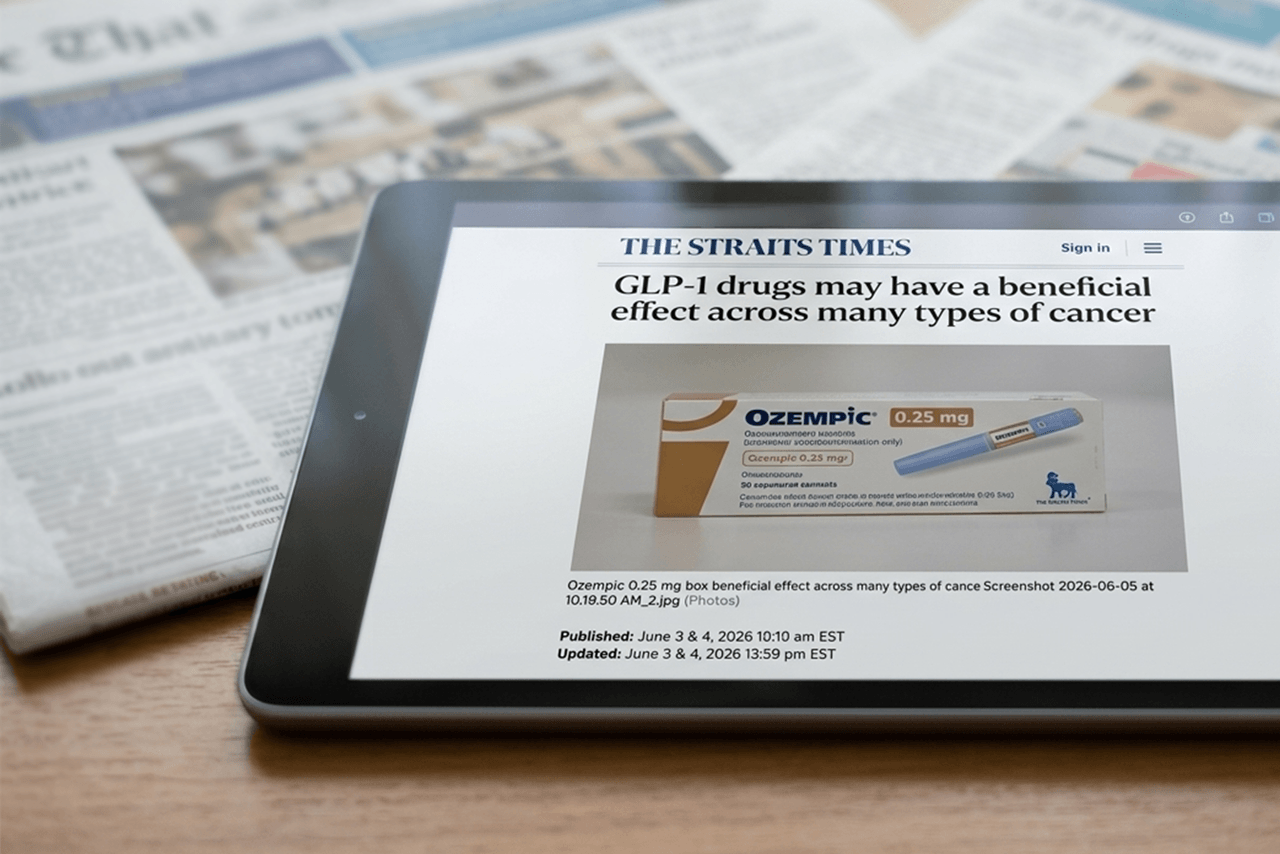
GLP-1 medicines are back in the news, this time for reasons beyond diabetes and weight management.
A recent Straits Times report covered new research presented at the American Society of Clinical Oncology meeting, where several studies suggested that GLP-1 medicines may have a beneficial effect across different cancer types.
The findings included possible links with lower cancer risk, reduced cancer progression in some patients, improved survival, and better responses to certain treatments.
It is encouraging research, but it needs to be understood carefully. GLP-1 medicines should not be seen as cancer prevention drugs at this stage.
For patients in Singapore, the more practical takeaway is this: weight, blood sugar control, inflammation and metabolic health all play an important role in long-term health. GLP-1 medicines may be suitable for some people, but they should only be considered as part of proper medical care, not because of headlines alone.
What are GLP-1 medicines?
GLP-1 medicines were first developed to treat type 2 diabetes. They work by helping regulate blood sugar, appetite and digestion.
Some GLP-1 medicines are also used in medically supervised weight management for suitable patients. Commonly discussed medicines in this class include semaglutide, liraglutide, dulaglutide and tirzepatide.
In Singapore, these medicines should be used under medical supervision. A doctor will need to consider your health history, BMI, metabolic risk, current medications and treatment goals before deciding whether they are suitable.
What did the latest research find?
The studies reported possible links between GLP-1 medicine use and better cancer-related outcomes.
According to The Straits Times, some studies found that patients taking GLP-1 medicines had lower risks of developing certain cancers, lower odds of cancer spreading to metastatic disease, better survival in some tumour types, and improved responses to some cancer treatments. Some of the strongest signals were reported in breast, lung, colorectal and liver cancers.
This matters because obesity, insulin resistance and chronic inflammation are linked to several long-term health risks, including some cancers. GLP-1 medicines may influence these pathways through weight loss, blood sugar control and other metabolic effects.
But this does not mean they prevent cancer.
What the studies do not prove
Most of the current findings are based on real-world or observational studies. These studies can show associations, but they cannot prove cause and effect.
For example, people taking GLP-1 medicines may also be receiving more regular medical follow-up, better diabetes care, earlier screening or other lifestyle support. These factors can also affect cancer risk and outcomes.
More clinical trials are needed before doctors can say whether GLP-1 medicines directly reduce cancer risk or improve cancer outcomes.
A doctor’s view: GLP-1 treatment should be guided by your health needs
“When patients ask about GLP-1 treatment, the first question is not only whether the medicine works. It is whether it is appropriate for that person. We need to look at their weight, blood sugar, liver health, medical history, current medications, side effect risk and what they are trying to achieve.
The cancer research is encouraging, but it should not change how patients make treatment decisions today. GLP-1 medicines should not be chosen because they sound ‘better’ from a headline. They should be considered only when there is a clear medical reason, with proper monitoring and follow-up.
For many patients, the most useful first step is a full review of their metabolic health and screening needs. That gives us a safer and more complete basis for deciding what support is suitable.”
Dr Tan Hui Li, General Practioner, HMI Medical CentreDr Tan sees patients for medically supervised weight management, including assessment and follow-up for suitable GLP-1 treatment.
What this means for patients
If you are overweight, have type 2 diabetes, pre-diabetes, fatty liver, high cholesterol or high blood pressure, it may be worth reviewing your metabolic health with a doctor.
This does not mean you need GLP-1 treatment. It simply means your weight, blood sugar, liver health and other risk factors should be looked at together, especially if you have a family history of cancer or other chronic conditions.
A proper review may include:
- Weight and BMI assessment
- Blood sugar and cholesterol checks
- Blood pressure review
- Liver health assessment
- Discussion of your family history
- Review of suitable cancer screenings
The goal is not just weight loss. It is to understand your overall health risk and decide what steps are appropriate for you.
Screening still matters
Even if future studies confirm wider benefits, GLP-1 medicines will not replace cancer screening.
Screening can help detect certain cancers or pre-cancerous changes earlier, sometimes before symptoms appear. Depending on your age, sex, family history and health profile, your doctor may discuss breast screening, colorectal cancer screening, cervical screening, liver health checks or other tests.
You should also seek medical advice if you notice symptoms such as blood in stools, unexplained weight loss, persistent changes in bowel habits, unusual lumps, abnormal bleeding, ongoing abdominal pain or symptoms that do not improve.
When to speak to a doctor
Consider speaking to a doctor if you:
- Are overweight or living with obesity
- Have diabetes, pre-diabetes or insulin resistance
- Have fatty liver, high cholesterol or high blood pressure
- Have a family history of cancer
- Are unsure which screenings are suitable for you
- Are considering GLP-1 treatment for weight management or diabetes
The latest research is encouraging, but it does not change the basics of good preventive health: understand your personal risk, manage metabolic health properly, and keep up with recommended screening.
The bottom line
The latest research on GLP-1 medicines and cancer risk is promising, but it is still early. These medicines should not be started because of cancer headlines alone.
What matters most is understanding your own health profile. If you are concerned about your weight, blood sugar, family history or screening needs, a conversation with a doctor can help you decide on the right next step.
For those exploring medical support for weight loss, HMI Medical Centre offers medically-supervised weight management as part of a broader approach to metabolic health and preventive care. The programme begins with a Weight & Metabolic Health Assessment to help doctors understand your health profile and guide suitable next steps.
Reference
This article is based in part on a Straits Times report, “GLP-1 drugs may have a beneficial effect across many types of cancer”, published on 3 June 2026, which highlighted research presented at the American Society of Clinical Oncology meeting.