
Skin condition
The 9-to-5 face: What corporate life is doing to your skin
Medically reviewed and written by Dr Kok Wai Leong, Dermatology Collective Clinic & Surgery
26 February 2026
Share

When corporate professionals come for a consultation, they usually do not say they are worried about their skin health.
They say, “Doctor, I look tired.”
Or, “Why is my skin suddenly so sensitive?”
Or, “I’m 40. Why am I still getting acne?”
These are everyday concerns, and they can happen to you and me. But behind them are real biological processes that are increasingly relevant in Singapore’s corporate environment.
Long hours indoors, heavy air-conditioning, chronic stress, irregular sleep and cumulative UV exposure all influence how skin ages and how it behaves. These are physiological changes that tells you that the skin needs your attention.
The skin barrier under chronic strain
The outermost layer of the skin acts as a barrier to the harsh environment¹. It prevents excessive water loss and protects against irritants and microbes.
In air-conditioned offices, humidity is often low. Prolonged exposure increases transepidermal water loss. When that happens, the skin barrier gradually weakens. Clinically, this shows up as:
- Tightness of the skin
- Increased sensitivity to products that usually did not cause problems
- Redness that appears more easily
- Eczema flares in predisposed individuals (especially those with childhood eczema and allergies)
- Fine lines that seem more obvious at the end of the day
Many patients assume this is simply due to aging. In reality, barrier dysfunction and inflammation often play a large role.
Therefore, when I develop a skincare plan for my patients, the first step is usually not adding more active ingredients. It is teaching them to restore the barrier function with gentle cleansing and moisturisers containing ceramides and lipids. When the skin barrier improves, inflammation often settles.
Stress and sleep are not abstract concepts for skin
Singapore consistently ranks among the more stressed urban populations in regional surveys. Long working hours and high performance expectations are common. Chronic stress elevates cortisol levels. Cortisol increases oil production, disrupts immune balance in the skin and delays wound healing².
This is why acne often flares during reporting periods or major project cycles. It is also why eczema worsens when stress is poorly controlled. This is your skin telling you that something is wrong, and you need to rectify this.
Sleep deprivation compounds the issue. Research shows that skin repair processes such as collagen synthesis and barrier recovery are most active at night. Inadequate sleep impairs these processes. In Singapore, where many professionals sleep fewer than seven hours regularly, this has visible consequences over time.
Therefore, the next skincare tip is to build good habits, adequate sleep, and learn to pre-empt flare-ups of your skin during stressful periods.
Working Indoors does not eliminate UV risk
A common misconception is that working indoors eliminates sun damage risk. Ultraviolet A penetrates window glass³. It does not cause sunburn but contributes to collagen breakdown and pigmentation. Singapore’s UV index frequently reaches high to very high levels throughout the year. Even brief daily exposures during daily commutes or sitting near windows has cumulative effects over decades.
Locally, skin cancer rates have risen over the years. Data from Singapore cancer registries have shown increasing incidence of basal cell carcinoma and squamous cell carcinoma over past decades⁴. While melanoma is less common compared to Western populations, a significant proportion in Asians occurs on the palms, soles and nails, which can delay detection.
Sunscreen use in Singapore has improved among younger individuals, but consistent daily application remains far from universal, especially among working adults who believe they are “indoors safe”. Photoprotection is preventive medicine. It reduces cumulative DNA damage in skin cells and slows photoageing.
It is therefore important to wear sunscreen, and it is wise to choose a broad spectrum version that gives you good protection.
Adult acne in professionals is common and is a medical problem
Adult-onset acne is one of the most frequent concerns I see in working adults. It typically presents along the jawline and lower face. Stress, hormonal fluctuations, occlusion from prolonged mask use and harsh skincare routines all contribute.
In Asian skin types, post-inflammatory hyperpigmentation is common. Even mild acne can leave dark marks that persist for months. Acne at 35 or 45 is not unusual. It is inflammatory and hormonally influenced, not a sign of poor hygiene.
My suggestion is: If your acne persists beyond two to three months despite reasonable care, medical treatment should be considered. Early intervention reduces scarring and long-term pigmentation.
Pigmentation problems are common in Asians
Many corporate professionals are concerned about uneven skin tone or dark patches that gradually worsen. In Singapore’s climate, pigmentation of the skin is influenced by several factors:
- High ambient UV exposure year-round
- Visible light exposure
- Recurrent inflammation from acne or eczema
- Overly aggressive skincare practices
Moreover, it is important to understand that the pigment cells or melanocytes in Asian skin tend to be more reactive. Even low-grade inflammation can trigger excess pigment production.
Effective management requires controlling inflammation, ensuring strict photoprotection and, where appropriate, using targeted medical treatments, which can be tailored to your skin type.
When to seek medical help
You should seek professional assessment if you notice:
- A mole that changes in size, colour or shape
- A non-healing sore
- Acne that scars
- Recurrent eczema affecting sleep or daily function
- Pigmentation that is spreading or becoming darker
Early evaluation is recommended to delay complications. Dermatologists often see severe cases, and these are in individuals who delay seeing their dermatologist, and this results in more intensive treatment to treat a condition that could have been rectified if acted upon early.
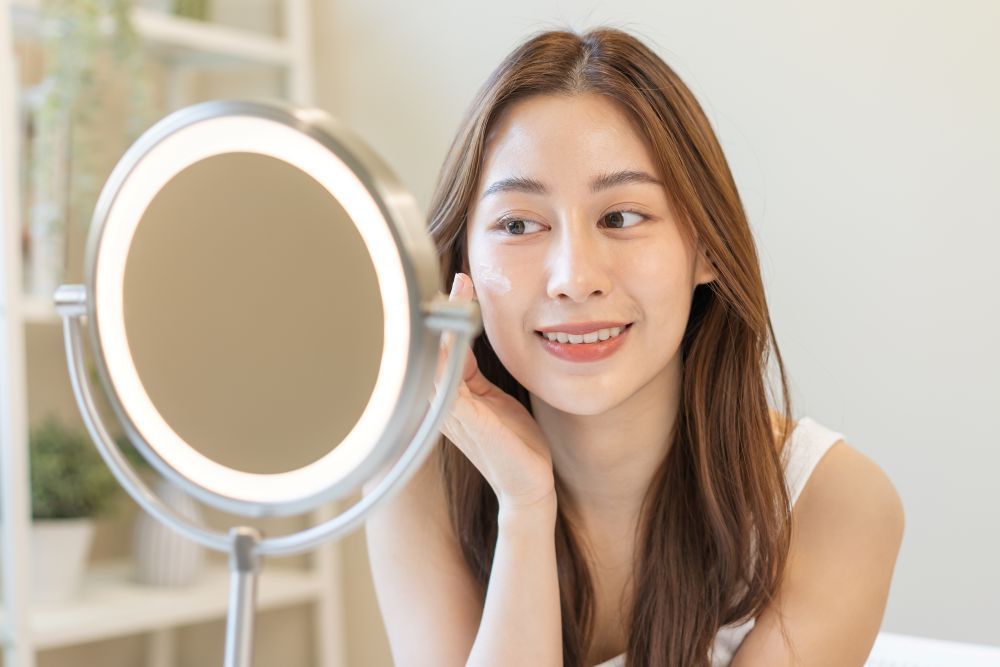
A practical and simple approach for busy professionals
Most corporate professionals do not need complicated routines. They need consistency.
Morning
- Cleanse with a gentle cleanser
- Moisturise with a lightweight formulation
- Sun protection with a broad-spectrum SPF 30 to 50
Evening
- Cleanse thoroughly, especially if you wear makeup
- Moisturise after cleansing
- Targeted treatment should be used only if medically indicated
Remember that skin barrier repair, inflammation control and photoprotection form the foundation of healthy skin in Singapore’s environment.
Take charge of your skin health
In my dermatology clinic, I often remind patients that skin reflects your cumulative habits. Chronic stress, insufficient sleep, dry indoor air and high UV exposure all leave subtle but measurable effects.
Healthy skin is not about perfection. It is about building a consistent routine and seeking medical attention early, when you need to.
In a corporate culture that values preventive screening for blood pressure and cholesterol, it may be time we treat skin health the same way. Find a dermatologist you can trust, because prevention is always better than cure.
References
- Proksch, Ehrhardt, Jens M. Brandner, and Jens-Michael Jensen. “The Skin: An Indispensable Barrier.” Experimental Dermatology 17, no. 12 (2008): 1063–1072. https://doi.org/10.1111/j.1600-0625.2008.00786.x
- Petra C. Arck et al., “Neuroimmunology of Stress: Skin Takes Center Stage,” Journal of Investigative Dermatology 126, no. 8 (2006): 1697–1704, https://doi.org/10.1038/sj.jid.5700104
- D’Orazio, John, Scott Jarrett, Amaro Amaro-Ortiz, and Timothy Scott. “UV Radiation and the Skin.” International Journal of Molecular Sciences 14, no. 6 (2013): 12222–12248. https://doi.org/10.3390/ijms140612222
- National Registry of Diseases Office (Singapore). Singapore Cancer Registry Annual Report. Accessed February 27, 2026. https://www.nrdo.gov.sg